Ditapis dengan

The Positive Philosophy of Auguste Comte Volume I
- Edisi
- -
- ISBN/ISSN
- -
- Deskripsi Fisik
- -
- Judul Seri
- -
- No. Panggil
- 100 Mar p1
- Edisi
- -
- ISBN/ISSN
- -
- Deskripsi Fisik
- -
- Judul Seri
- -
- No. Panggil
- 100 Mar p1
The Positive Philosophy of Auguste Comte Volume II
- Edisi
- -
- ISBN/ISSN
- -
- Deskripsi Fisik
- -
- Judul Seri
- -
- No. Panggil
- 100 Mar p2
- Edisi
- -
- ISBN/ISSN
- -
- Deskripsi Fisik
- -
- Judul Seri
- -
- No. Panggil
- 100 Mar p2

Philosophy : a Very Short Introduction
- Edisi
- -
- ISBN/ISSN
- 0-19-285421-6
- Deskripsi Fisik
- -
- Judul Seri
- -
- No. Panggil
- 100 Cra p
- Edisi
- -
- ISBN/ISSN
- 0-19-285421-6
- Deskripsi Fisik
- -
- Judul Seri
- -
- No. Panggil
- 100 Cra p

Philosophy Bites
- Edisi
- -
- ISBN/ISSN
- 978-0-19-957632-6
- Deskripsi Fisik
- -
- Judul Seri
- -
- No. Panggil
- 100 Edm p
- Edisi
- -
- ISBN/ISSN
- 978-0-19-957632-6
- Deskripsi Fisik
- -
- Judul Seri
- -
- No. Panggil
- 100 Edm p
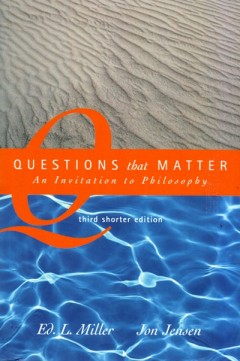
Questions that Matter: an Invitation to Philosophy
- Edisi
- 3
- ISBN/ISSN
- 978-0-07-297501-7
- Deskripsi Fisik
- xvi, 491 hlm.: ilus.; 22,7 cm.
- Judul Seri
- -
- No. Panggil
- 100 Mil q
- Edisi
- 3
- ISBN/ISSN
- 978-0-07-297501-7
- Deskripsi Fisik
- xvi, 491 hlm.: ilus.; 22,7 cm.
- Judul Seri
- -
- No. Panggil
- 100 Mil q

The Methods of Ethics
This book is a classic work in moral philosophy, aiming to systematically examine various methods for determining right conduct. Sidgwick identifies and analyzes three main approaches to ethics: egoism (egoistic hedonism), intuitionism, and utilitarianism. Through a critical philosophical approach, he explores the rational basis of moral principles, the relationship between happiness and duty, …
- Edisi
- -
- ISBN/ISSN
- NONE
- Deskripsi Fisik
- 249 halaman
- Judul Seri
- -
- No. Panggil
- 171 Hen m

Freedom and Reason
This book examines the conflict between freedom and rationality in ethics, where rationality is seen as limiting freedom, while freedom seems incompatible with rationality. It attempts to reconcile the two through three key assumptions, that moral judgments are prescriptive, universalizable, and logically related. Universalizability places rationality within moral judgment, while prescriptivity…
- Edisi
- -
- ISBN/ISSN
- 019881092X
- Deskripsi Fisik
- viii, 224 halaman
- Judul Seri
- -
- No. Panggil
- 170 Har f

Four Phases of Morals : Socrates, Aristotle, Christianity, Utilitarianism
This book examines the development of ethical thought through four main phases, the teachings of Socrates, Aristotle, Christian morality, and utilitarianism. The author highlights how Socrates shifted the focus of philosophy from cosmological speculation to an understanding of humankind and the moral life, emphasizing the importance of self knowledge and the use of reason as the basis for virtu…
- Edisi
- -
- ISBN/ISSN
- NONE
- Deskripsi Fisik
- 223 halaman
- Judul Seri
- -
- No. Panggil
- 170 Joh f
Classical Utilitarianism From Hume to Mill
This book examines the development of classical utilitarianism in the tradition of Western moral philosophy from the 18th to the 19th centuries. The author traces the concept of utility as a basis for moral judgment, evolving from the thought of David Hume to a more systematic form in the work of John Stuart Mill. Through historical and philosophical analysis, Rosen shows how ideas about utilit…
- Edisi
- 1
- ISBN/ISSN
- 0-203-98735-7
- Deskripsi Fisik
- xiv, 289 halaman
- Judul Seri
- -
- No. Panggil
- 171.5 Fre c

Adam Smith : Teori Sentimen-sentimen Moral
- Edisi
- -
- ISBN/ISSN
- -
- Deskripsi Fisik
- -
- Judul Seri
- -
- No. Panggil
- 170 Smi a
- Edisi
- -
- ISBN/ISSN
- -
- Deskripsi Fisik
- -
- Judul Seri
- -
- No. Panggil
- 170 Smi a
 Karya Umum
  Filsafat
  Agama
Agama  Ilmu-ilmu Sosial
  Bahasa
  Ilmu-ilmu Murni
  Ilmu-ilmu Terapan
  Kesenian, Hiburan, dan Olahraga
  Kesusastraan
  Geografi dan Sejarah