Ditapis dengan
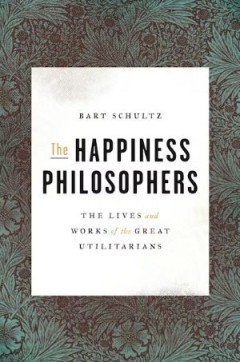
The Happiness Philosophers : The Lives and Works of The Great Utilitarians
This book examines the development of utilitarian philosophy through the lives and thoughts of its key figures, such as Jeremy Bentham, John Stuart Mill, and Henry Sidgwick. It traces how the idea of happiness as the highest moral goal was formulated, debated, and applied in different social, political, and cultural contexts. Using a historical and analytical approach, the author demonstr…
- Edisi
- -
- ISBN/ISSN
- 978-0-691-15477-0
- Deskripsi Fisik
- xv, 439 halaman
- Judul Seri
- -
- No. Panggil
- 171.5 Bar h
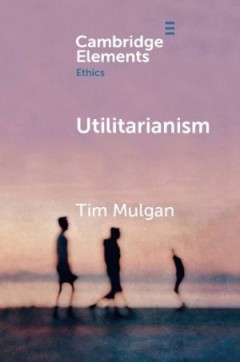
Utilitarianism : Elements in Ethics
Moral theories can be distinguished not only by the answers they give but also by the questions they ask. Utilitarianism's central commitment is to the promotion of well-being, impartially considered. This commitment shapes utilitarianism in a number of ways. If scarce resources should be directed where they will best promote well-being, and if theoretical attention is a scarce resource, then m…
- Edisi
- 1
- ISBN/ISSN
- 978-1-108-73060-0
- Deskripsi Fisik
- 76 halaman
- Judul Seri
- -
- No. Panggil
- 171.5 Tim u
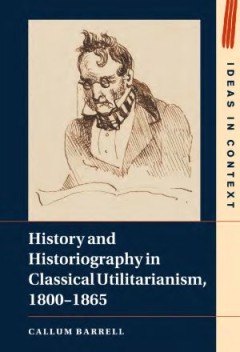
History and Historiography in Classical Utilitarianism, 1800–1865 (Ideas in…
This first comprehensive account of the utilitarians' historical thought intellectually resituates their conceptions of philosophy and politics, at a time when the past acquired new significances as both a means and object of study. Drawing on published and unpublished writings - and set against the intellectual backdrops of Scottish philosophical history, German and French historicism, romanti…
- Edisi
- -
- ISBN/ISSN
- 978-1-316-51907-3
- Deskripsi Fisik
- x, 265 halaman
- Judul Seri
- -
- No. Panggil
- 171.5 Cal h
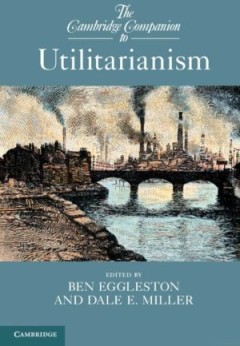
The Cambridge Companion to Utilitarianism
Utilitarianism, the approach to ethics based on the maximization of overall well-being, continues to have great traction in moral philosophy and political thought. This Companion offers a systematic exploration of its history, themes, and applications. First, it traces the origins and development of utilitarianism via the work of Jeremy Bentham, John Stuart Mill, Henry Sidgwick, and others. The…
- Edisi
- -
- ISBN/ISSN
- 978-1-107-02013-9
- Deskripsi Fisik
- xii, 389 halaman
- Judul Seri
- -
- No. Panggil
- 171.5 Ben c
Bentham’s Binary Form of Maximizing Utilitarianism (British Journal for the…
Jeremy Bentham is often interpreted as defending a satisficing, rather than maximizing, version of utilitarianism, where an act is right as long as it produces more pleasure than pain. This lack of maximization is surprising given Benthams maximizing slogan the greatest happiness of the greatest number. Against the satisficing interpretation, I argue that Bentham consistently defends a maximizi…
- Edisi
- -
- ISBN/ISSN
- 1469-3526
- Deskripsi Fisik
- 24 halaman
- Judul Seri
- -
- No. Panggil
- 171.5 Joh b
Henry Sidgwick, Moral Order, and Utilitarianism (The European Journal of the …
Henry Sidgwick is today remembered as a later nineteenth century moral philosopher who struggled with his Christian faith, having difficulty reconciling this with an emergent modern and secular philosophy. In this paper, it is suggested that the only accurate part of this statement relates to the century in which Henry Sidgwick lived. It is argued that modern readers lack sensitivity to questio…
- Edisi
- -
- ISBN/ISSN
- 1469-5936
- Deskripsi Fisik
- 25 halaman
- Judul Seri
- -
- No. Panggil
- 171.5 Kei h

Utilitarianism for An Against
Two essays on utilitarianism, written from opposite points of view, by J. J. C. Smart and Bernard Williams. In the first part of the book Professor Smart advocates a modern and sophisticated version of classical utilitarianism; he tries to formulate a consistent and persuasive elaboration of the doctrine that the rightness and wrongness of actions is determined solely by their consequences, and…
- Edisi
- -
- ISBN/ISSN
- 978-0-521-09822-9
- Deskripsi Fisik
- 131 halaman
- Judul Seri
- -
- No. Panggil
- 171.5 Sma u
Utilitarianism (Reprinted from Fraser’s Magazine Seventh Edition, 1879)
This work discusses the ethical theory of utilitarianism developed by John Stuart Mill as the basis for determining right and wrong in human actions. Mill asserted that the primary principle of morality is the greatest happiness principle, which states that an action is right if it produces the greatest happiness for the greatest number of people, and wrong if it causes suffering. Happiness is …
- Edisi
- -
- ISBN/ISSN
- NONE
- Deskripsi Fisik
- 69 halaman
- Judul Seri
- -
- No. Panggil
- 171.5 Joh u
Classical Utilitarianism From Hume to Mill
This book examines the development of classical utilitarianism in the tradition of Western moral philosophy from the 18th to the 19th centuries. The author traces the concept of utility as a basis for moral judgment, evolving from the thought of David Hume to a more systematic form in the work of John Stuart Mill. Through historical and philosophical analysis, Rosen shows how ideas about utilit…
- Edisi
- 1
- ISBN/ISSN
- 0-203-98735-7
- Deskripsi Fisik
- xiv, 289 halaman
- Judul Seri
- -
- No. Panggil
- 171.5 Fre c
Jeremy Bentham and the Codification of Law (Cornell Law Review, Volume 55, Is…
This article examines the legal thought of Jeremy Bentham, a leading figure in the modern legal reform movement, particularly regarding legal codification. It outlines Benthams critique of the 18th century English legal system, which he considered inefficient, unsystematic, and riddled with uncertainty due to the dominance of common law and judicial practice. Bentham proposed legal codification…
- Edisi
- -
- ISBN/ISSN
- 0010-8847
- Deskripsi Fisik
- 21 halaman
- Judul Seri
- -
- No. Panggil
- 340.112 Dea j
 Karya Umum
  Filsafat
  Agama
Agama  Ilmu-ilmu Sosial
  Bahasa
  Ilmu-ilmu Murni
  Ilmu-ilmu Terapan
  Kesenian, Hiburan, dan Olahraga
  Kesusastraan
  Geografi dan Sejarah